I still remember with excitement, how I embarked on a five+ months’ fieldwork journey to Ghana during last year’s autumn. That evening of October 3rd as I stepped off the airplane in Accra, I was clear in my mind on what to do; go through the remaining clearances and permits like a hot knife would through butter, recruit and train a fantastic team of assistants for the community surveys and then do the ultimate—gather the qualitative data, document perspectives across all twenty-eight mining communities and return to Europe before Christmas. I carried with me a carefully designed survey, ethical clearance, consent forms, a notebook to document my experiences and a great sense of anticipation that everything would work according to plan. What I was yet to fully understand though, was how the coming months were going to test my patience and resilience—and how this would challenge my perspectives.
My work was pretty well cut out; conduct the community surveys first and then engage with stakeholders in Ghana’s mining sector—artisanal miners, traditional authorities, local government officials, mining regulators, investigative journalists and environmental advocates, expert practitioners and even representatives of multinational mining companies. I wanted to understand why, despite all the regulations and reforms, our tropical forests, water bodies and biodiversity continue to be destroyed through the activities of artisanal and small-scale gold miners (known in Ghanaian parlance as galamsey).
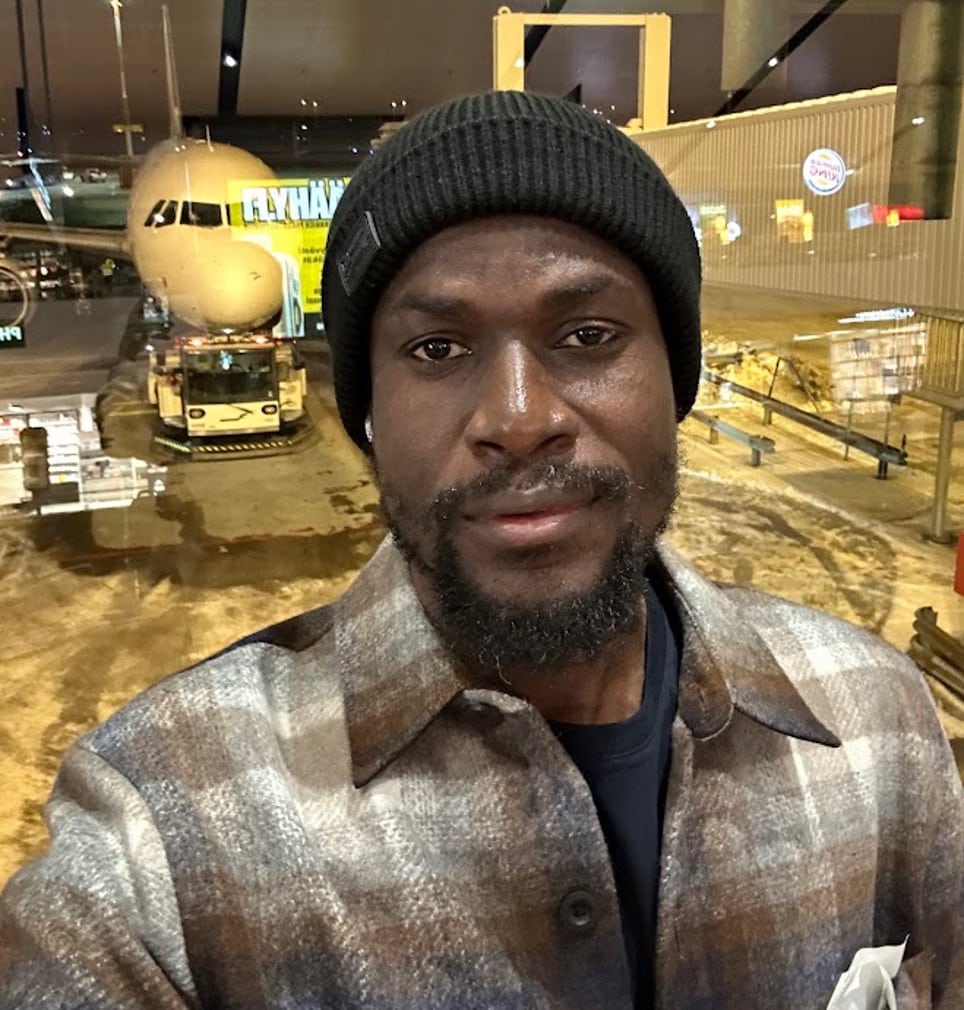
A moment at the airport before departure.
One of my earliest lessons came very early when I had a conversation with a colleague who just returned from the field. It was that, fieldwork actually begins long before the first question is asked. So, six months prior, I had sent in letters of request to seek the approval for participation from all the identified stakeholders. Their response? Prompt and positive. They were ready whenever I was. Some of them even followed up weeks later, requesting for letters of introduction from my university and to know the timelines.
Bureaucratic Bottlenecks are Real but Flexibility in Approach Wins
I was quite confident about the efforts I put in to make the initial contacts; getting an extra ethical clearance from Ghana, acquiring the necessary local permits, contacting potential participants and fine-tuning my community entry protocols. And oh, I had the impression that everything was under control. However, the realities soon began to set in. I got to understand upon arrival that it could take up to two months for the Ghanaian ethical clearance and related permits to be granted—that was actually more than the approved period for the entire fieldwork. Then came the unreasonable demands from some of the first field assistants I had recruited; they wanted more money than budgeted, and they would not accept any explanations for that. Already, unfavorable movements in the exchange rate had thrown my budget out of gear. But the straw that broke the camel’s back landed when I started receiving withdrawal emails from some of my key participants—they simply were not interested in participating in the study any longer.
At this point, I began to appreciate that fieldwork rarely goes exactly as planned. Then came those days when scheduled interviews could not happen because schedules changed, logistics fell through or weather conditions disrupted entire plans. At first, these moments felt like unsurmountable setbacks. But the frequent meetings I held with my supervisors pointed to one thing; even the best prepared strategies don’t guarantee automatic results. Sometimes, what is required is flexibility, trust and tolerance—which virtues must be built patiently, often through compromise, engagement and lobbying. Approaching each of these challenges with a good blend of the three made all the difference. Overtime, these challenges became part of the rhythm of my work.
The Many Faces of Artisanal Mining
My travels across the mining communities unveiled far more thought-provoking issues than I had envisaged. First is the fact that, unlike the case is with the multinational mining companies, proceeds from artisanal mining are largely retained within the affected communities. Due to that, there is noticeable economic transformation at the grassroots. I saw how an entire local economy has been made vibrant through bustling trade, lively transport systems and a booming hospitality industry. Contrary to what used to be the case, a number of locals have begun to own mining operations. New locally owned businesses were also emerging to profit from the mining value chain—small gold refineries, mineral aggregators, mechanical workshops, transport service providers, fuel stations, etc. As a result, many residents of these mining communities told me they are indifferent about multinational mining companies’ corporate social responsibility initiatives; they can now invest in their own livelihoods, finance their children’s education and even take on some ambitious community development projects through galamsey.
I also observed how agriculture appears to be on a decline in the affected communities we visited. I spoke with cash crop and food crop farmers who have lost their lands to mining. Beyond losing their farmlands, the labor market no longer favored agricultural work. The daily wage of an unskilled artisanal miner far exceeded what was paid to an agricultural laborer. The effect? Farm labor has become scarce and expensive. As many smallholder farmers are unable to afford the high labor wages, they have reduced the size of land they could cultivate; a situation which has resulted in soaring food prices and a loss of traditional livelihoods. One cocoa farmer told me, “Large acres of my cocoa farms have been bought by artisanal miners. It is not that I was willing to sell it to them but if I don’t, they will buy it from the landowners anyway and with that, I will lose everything. So, I have to sell my farms to them”.
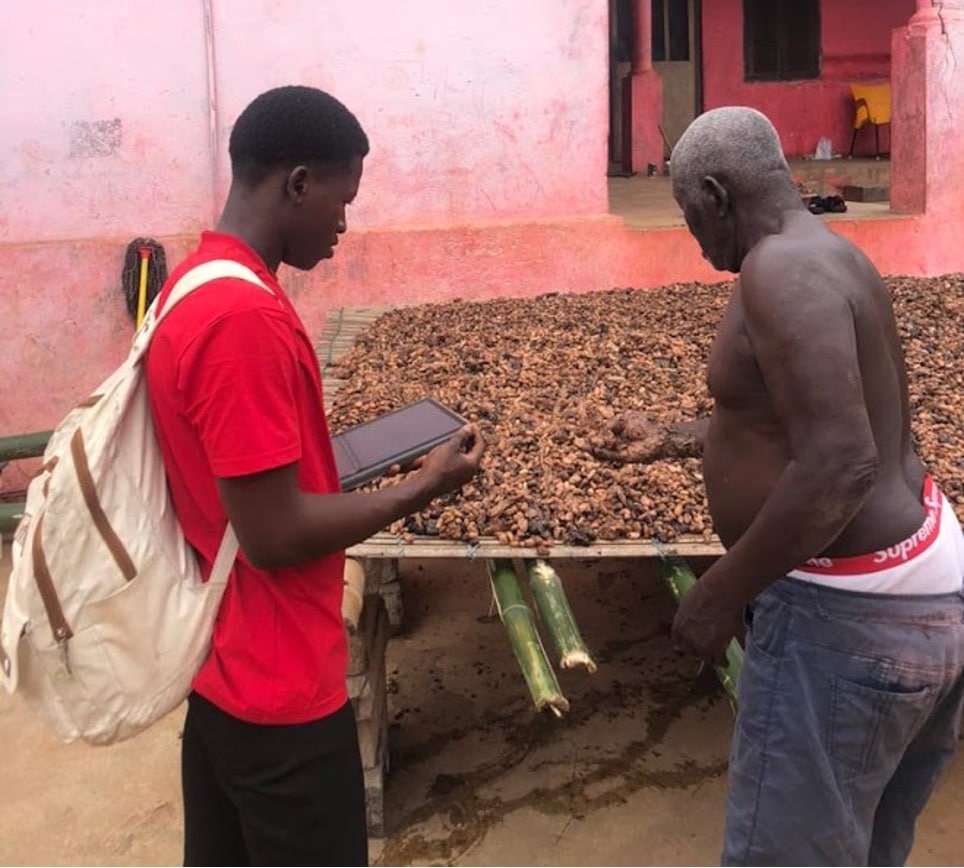
An enumerator interviewing a cocoa farmer who was drying his cocoa beans.
There was also an unusually high presence of foreign nationals in the mining areas as the booming galamsey trade continues to attract migrants from neighboring countries, and continents like Asia. While majority of the West African migrants generally provided labor, many of their non-African counterparts owned some of the mining sites—in many instances, they backed locals with the needed resources and the locals in turn, fronted as the ‘owners’ of those mines.
Then there were the environmental concerns that transcend current monetary returns. Across the communities we visited, the pattern was clear—no matter how rewarding the immediate economic benefits were, there was an enduring environmental price to be paid. And unfortunately, that price is unequally distributed. Between the powerful and the not so privileged. Most of the financial gains may accrue to only a few people today, but the adverse environmental consequences affected all and sundry; including generations after us. I saw how several acres of pristine rainforests which were once home to rich tropical biodiversity, have been destroyed. Not only that, also the water bodies that run through them.
What has disappointed me the most though, was the lack of enforcement of our environmental laws. I recall some mining regulators emphasizing how Ghana does not require new laws to address galamsey but rather, more effective enforcement of existing regulations. Such enforcement, they maintained, was a duty of state security. But I also remember being told repeatedly of how some of these state security officers have been compromised by the artisanal miners. Indeed, the extortion by some of these officials has actually emboldened the illegal miners—they are prepared to pay large sums of money to these unscrupulous security officials who in turn, offer to protect them or keep them on high alert. There are even groups of individuals emerging, who pose as the state’s task force members visiting galamsey sites and taking money from them.
So, do I believe galamsey will ever stop? For me, this is a very complex question that requires more tact to answer. And those are some of the interrogations I would be exploring in my work. But it was interesting to witness firsthand, how all these realities coexisted within the same space. I think many households are simply caught in a trap—they appear to benefit economically from this type of mining yet, are lost on the untold environmental consequences they would be left to grapple with. And it is not a question of them being unaware of the realities, they simply cannot find a sustainable pathway to break free. Such a perspective added new dimensions to my understanding of how the stories of these people were not only worth hearing; but also, the need for them to be re-echoed for urgent action—an action that must be carried out with a swift resolve.
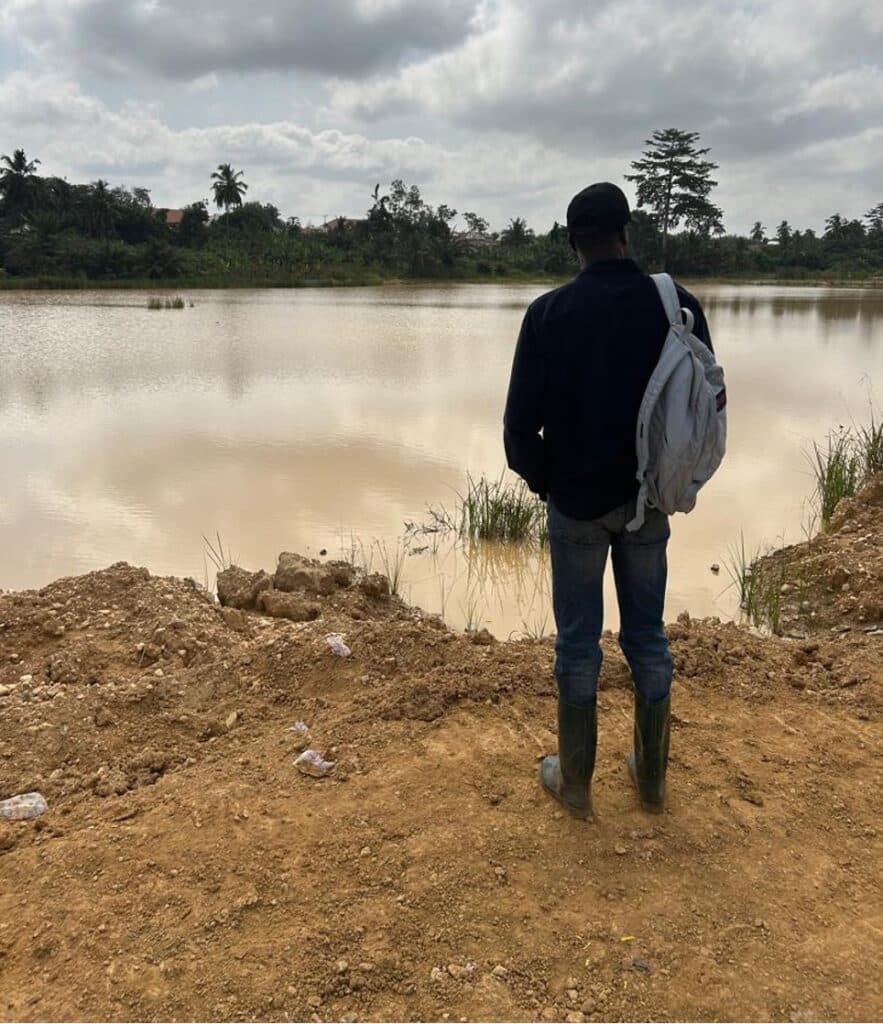
Standing at the banks of a galamsey-polluted river.
Moving Forward with a Resolve
As I concluded my fieldwork, I kept reflecting on a claim once made by a friend, “Researching in Africa is not the same as researching about Africa”. The experiences of the past months not only affirm this, they also polished my perspectives. I have come to appreciate that, context creates unique epistemological obligations which challenge our assumptions. I realize now how the most valuable outcomes of my research could extend beyond what the literature points to. I left Ghana with a deeper understanding of how not to view other people’s developmental challenges from a distance and proffer solutions. Meaningful research goes beyond collecting information; it engages people in a way that respects their knowledge, experiences and realities. That is why this kind of work matters, and reveals how much there is to learn when we step outside our familiar environments and truly listen. Of course, the rest of the work continues; not only with the analysis that follows, but in carrying forward the lessons that must be learnt from the people who made this experience so impactful.
Emmanuel Kofi Dzage
emmanuel.e.dzage@utu.fi
Department of Biodiversity Sciences, University of Turku, Finland.