Agendas and initiatives emerge when problems become urgent and visible. Biodiversity loss is no exception, as reflected in repeated calls that emphasize the urgent need for funding and action. Growing international concern has led to increasing calls for greater financial resources to halt biodiversity loss, often emphasizing the scale of the biodiversity financing gap (United Nations, 2023). While these calls have raised awareness and mobilized funding, they have paid far less attention to a critical question: Does funding allocated to biodiversity-related activities deliver meaningful ecological outcomes?
Recent evidence casts doubt on the assumption that more funding automatically leads to better biodiversity results. Using data on more than 8 000 European Union-funded biodiversity projects across 26 countries over two decades, a study by Poyser (2025), published in a leading finance journal, shows that ecological gains associated with public funding for biodiversity-related activities are generally limited. Conservation-oriented funding appears most effective for forest preservation, an outcome that responds relatively quickly to targeted intervention, but exhibits weak or inconsistent effects on species integrity, protection, and extinction risk. These findings challenge the assumption that simply expanding funding volumes will meaningfully reduce biodiversity loss.

The results also point to diminishing marginal returns to biodiversity-related funding. Projects financed above median levels do not systematically outperform more modestly funded projects in ecological outcomes or improvements in biodiversity data coverage. Once a basic level of funding is reached, scaling up investment yields little additional benefit unless resources are carefully targeted toward tractable ecological outcomes. This pattern holds for conservation-oriented projects as well as research-oriented biodiversity projects. While research funding expands biodiversity data coverage, additional funding does not reliably translate into improved ecological conditions.
These findings raise an issue: the disconnection between pure biodiversity knowledge and the financial principles that govern how financial systems allocate resources efficiently and maximize expected outcomes. As a result, attracting and sustaining financial resources for promoting biodiversity remains challenging. While ecological systems are complex, nonlinear, and influenced by forces beyond individual projects’ control, this disconnect makes it difficult to show that an additional unit of funding allocated to biodiversity-related activities leads to proportional or sustained improvements in ecological outcomes. Consequently, calls for more funding face growing challenges in maintaining credibility and momentum over time without a clearer understanding of how funding translates into biodiversity impact or risk reduction.
This challenge is further amplified by the lack of compensation mechanisms for investors when mobilizing private capital for biodiversity preservation. Most biodiversity projects are capital-intensive but give limited consideration to the financial side, particularly revenue generation or risk-adjusted returns as direct compensation. Without credible pathways linking biodiversity outcomes to financial returns or risk mitigation, private investment remains limited and selective, often confined to niche activities such as biotechnology-related projects with commercialization potential.
Evidence and incentives matter in shaping financial decisions that determine biodiversity outcomes.
Policy interventions exhibit a similar tension between ambition and effectiveness. Regulatory measures such as designating protected areas deliver considerable environmental benefits, including reduced toxic emissions from nearby firms. However, recent evidence from Akbari et al. (2025) shows that these gains come primarily from contractions in production scale and employment in the area, rather than from technological upgrading or efficiency-enhancing innovation. Firms exposed to biodiversity-related regulatory pressure respond mainly by increasing material costs and scaling down activity, not by adopting cleaner production technologies or investing in pollution abatement. As a result, environmental improvements are accompanied by lower productivity, reduced profitability, and declines in market valuation for affected firms. These adjustments may also have unintended social consequences: reduced firm activity can lead to job losses, lower wages, and diminished economic opportunities for local communities that depend on these firms, potentially lowering living standards in regions where conservation measures are implemented.
These findings suggest that biodiversity policies can reduce environmental harm, but often at the cost of economic activity and investor value. While such trade-offs may be acceptable or even necessary in some contexts, reliance on contractionary mechanisms raises concerns about financial sustainability and long-term political support. Market responses to biodiversity protection initiatives are driven more by anticipated legal and compliance costs (Chen et al., 2024) than by the intrinsic or long-term value of biodiversity conservation. Moreover, conservation outcomes achieved through reduced production rather than innovation may prove difficult to sustain as economic pressures intensify, particularly in regions where livelihoods and industrial activity depend on land use and natural resources.
These findings suggest that biodiversity policies can reduce environmental harm, but often at the cost of economic activity and investor value.
In addition, numerous consequences arising from biodiversity and broader environmental conventions need to be considered. For example, implementing Natura 2000, the European Union’s network of nature protection areas, in Finland led to a significant drop in the value of protected agricultural and forest land. The results are intuitive because the convention restricts logging, agricultural activities, and new infrastructure development, reducing economic activity and landowners’ income. However, property values also increase, particularly for residential properties, as these assets gain environmental amenities and face supply limits as conventions are implemented. These valuation changes are presented in the research of Ahlvik & Van Kooten (2025), highlighting the transmission of asset value among different actors in the economy who own different assets, in this case from landowners to house and cabin owners. More broadly, rising housing prices, along with the implementation of climate and nature conventions, can create barriers for people who do not own a house while benefiting homeowners, potentially widening inequality in society. These impacts must be considered because if the conventions do not create benefits that outweigh costs for society, they have no value or meaning. Burdening living standards and quality of life is never a solution. A new study by Strandell et al. (2026) also shows that high-income households tend to occupy more energy-efficient products than low-income households. Therefore, the solution might not be to impose further restrictions on low-income households, but to improve their income.
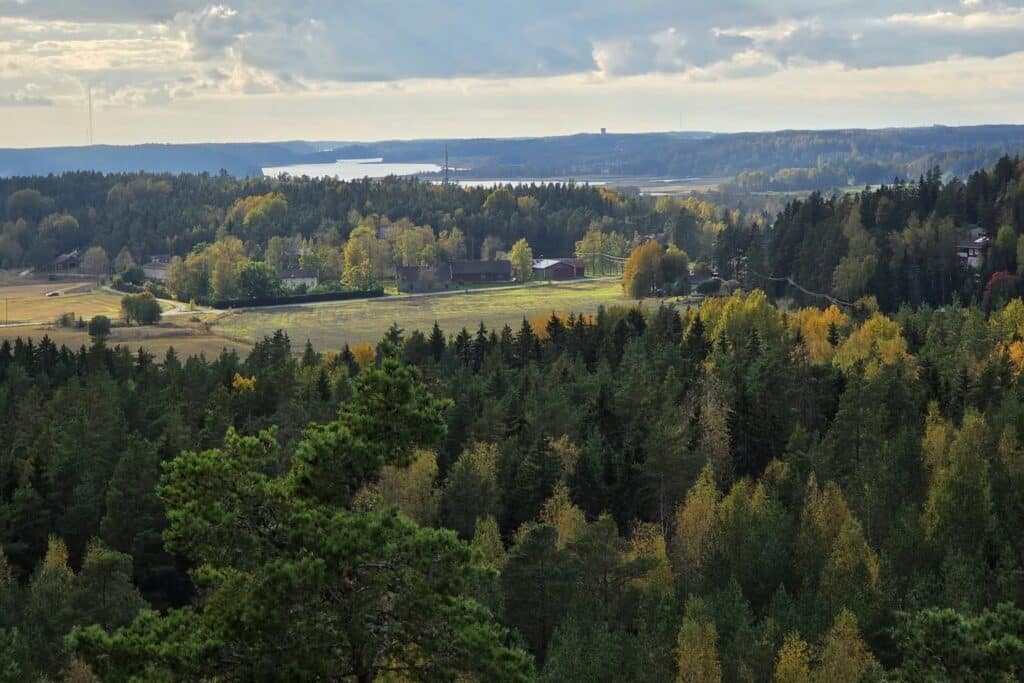
Together, this evidence highlights a weakness in current biodiversity agendas: an emphasis on urgency and scale without sufficient focus on effectiveness or cost-effective prioritization of conservation and restoration. We still know too little about the mechanisms through which biodiversity-related actions translate into ecologically and economically sustainable outcomes that improve quality of life, i.e., biodiversity is integrated into social and economic development scenarios. Without rigorous research that clarifies causal pathways, repeated calls for more resources cannot evolve into a credible, sustainable strategy to halt biodiversity loss. Such research must develop frameworks that connect biodiversity science with financial and economic principles of efficient resource allocation and outcome assessment. It must also establish metrics that are both economically meaningful and ecologically grounded, and identify incentive structures that encourage innovation, adaptation, and compensation rather than simple contraction.
Addressing this gap requires a genuinely multidisciplinary approach, including biodiversity finance and economics, that explicitly links biodiversity to economic mechanisms, allowing ecological knowledge to inform financial decision-making and financial tools to be used to solve biodiversity challenges. More importantly, the next phase must move beyond calls for ”more” toward a more credible agenda focused on ”better,” with evidence and demonstrable outcomes.
The author is a postdoctoral researcher in the Department of Accounting and Finance at TSE.
References
Ahlvik, L., & Van Kooten, S. (2025). Distributional Impacts of Conservation on Land Prices: Evidence from Natura 2000. Land Economics, 101(2), 183–200. https://doi.org/10.3368/le.101.2.062723-0057R
Akbari, A., Ng, L., Duy, M., & Yu, J. (2025). The real effects of protecting biodiversity. Review of Finance. https://doi.org/10.1093/rof/rfaf055
Chen, F., Chen, M., Cong, L. W., Gao, H., & Ponticelli, J. (2024). Pricing the Priceless: The Financial Cost of Biodiversity Conservation (No. w32743; p. w32743). National Bureau of Economic Research. https://doi.org/10.3386/w32743
Poyser, A. (2025). Does financing biodiversity reduce biodiversity loss? Evidence from EU funding of science and innovation. Review of Finance. https://doi.org/10.1093/rof/rfaf064
Strandell, A., Karhinen, S., Pitkänen, K., Siiskonen, S.-T., & Ruokamo, E. (2026). Twice upon a home: Energy use, emissions and inequality across primary and second homes. Energy Research & Social Science, 131, 104491. https://doi.org/10.1016/j.erss.2025.104491
United Nations. (2023). State of Finance for Nature 2023. https://doi.org/10.59117/20.500.11822/44278